Star Boy Font: Bold Display Typography for Holiday Designs
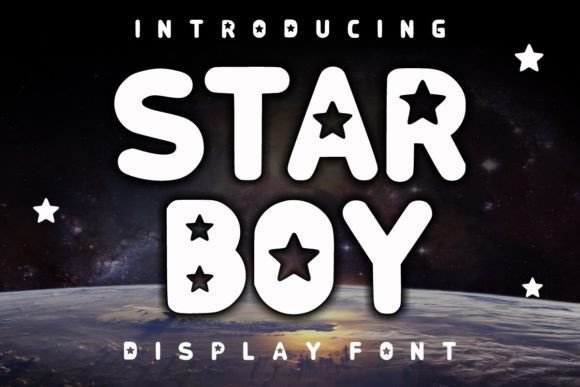
When you are working on a project that needs to capture the energy of a winter wonderland or the excitement of a holiday sale, standard typography often falls flat. You need a typeface that brings its own personality to the table. This is where Star Boy enters the conversation. It is not just a collection of letters; it is a decorative display font built specifically to shine during the festive season. With its integrated star-shaped elements, it offers a visual punch that is hard to ignore, making it a go-to choice for designers looking to inject some fun and boldness into their work.
At its core, Star Boy is a display font, which means it is designed to be used at larger sizes for headlines and logos rather than long blocks of body text. The defining characteristic is, of course, the star motifs woven into the letterforms. These are not just random additions; they are carefully crafted to complement the geometry of the typeface. The style feels playful and confident, bridging the gap between a modern typography aesthetic and a whimsical holiday theme. It avoids the overly kitschy look of some seasonal fonts, offering a cleaner but still highly decorative vibe.
Where Star Boy Truly Shines
Understanding where to deploy a premium font like this is just as important as having it in your library. Because of its bold weight and decorative nature, Star Boy is particularly effective in environments where grabbing attention is the primary goal. Think about the shelf appeal of product packaging. If you are designing a box for a seasonal chocolate bar or a limited-edition coffee blend, this font sets the mood immediately. It signals to the customer that the product inside is special and celebratory.
Beyond physical goods, this creative font excels in the digital space. Social media graphics are a prime example. In a crowded feed, a standard sans serif can get lost. However, a headline set in Star Boy stands out due to its unique silhouette. It works exceptionally well for Instagram stories, Pinterest pins, or Facebook event banners promoting holiday markets or New Year’s Eve parties. For web design, you would want to use it sparingly—perhaps for a hero banner or a special announcement—rather than for navigation menus where clarity is paramount.
The font is also a natural fit for invitation design. Whether it is a digital invite for a corporate holiday party or a printed card for a family gathering, the typeface brings a sense of occasion without needing much additional illustration. Similarly, for t-shirt designers or makers of quote prints, Star Boy provides the "finished" look that crafters and hobbyists often seek. It turns a simple phrase like "Happy Holidays" into a graphical element.
Design Strategy and Brand Identity
Choosing a display font is a strategic decision that impacts your entire brand identity. When you select Star Boy, you are making a specific statement about your brand’s voice. It suggests that the brand is approachable, energetic, and festive. For small business owners, this can be a powerful tool for seasonal rebranding. You might use a serious sans serif font for your year-round operations, but switching to Star Boy for your December marketing materials can signal to your audience that it is time to celebrate.
However, visual hierarchy is key. Because Star Boy is so visually dense, it commands attention. In editorial design, such as a holiday magazine cover or a blog post header, it serves as the anchor. You pair it with a neutral background and a clean secondary typeface to ensure the design doesn't become overwhelming. This brings us to the concept of font pairing. Star Boy generally pairs best with clean, geometric serif fonts or sans serif fonts. A font like Montserrat or Open Sans works well because it doesn't compete with the star elements. Avoid pairing it with other script fonts or handwritten fonts, as this creates visual noise rather than contrast.
Practical Tips for Implementation
Before you commit to Star Boy for a major project, it is worth taking the time to evaluate the fit. First, consider your readability requirements. If your project involves small text on a label or detailed legal copy on a poster, this font is not the right tool for that specific job. Its strength lies in the headline, the logo, or the main quote. For the supporting text, you need a legible typeface that balances the flair of the display font.
Next, look at the technical details of the commercial font package. High-quality design assets usually come with various styles or weights. Check if Star Boy offers different variations that allow you to create a hierarchy within the headline itself. Also, verify the licensing. If you are using this for logo design for a client or for packaging design that will be sold in retail stores, you need to ensure your license covers commercial use. This is a standard practice for any premium font to avoid legal headaches later.
Finally, test the font in context. Mockup the design on the actual medium—whether it is a phone screen, a cardboard box, or a cotton t-shirt. Star Boy has a distinct personality, and seeing it in a real-world environment helps you determine if the "fun and bold" vibe aligns with the specific message you are trying to convey. When used correctly, it becomes more than just text; it becomes a central part of the storytelling, capturing the spirit of the season in a way that standard typefaces simply cannot.