Infuse Joy: Using the Rainbow Display Font in Your Designs
When you first encounter the Rainbow typeface, the immediate reaction is rarely a passive one. It is a font that practically bounces off the screen, carrying with it a sense of unbridled optimism and kinetic energy. In the vast landscape of modern typography, where minimalism and geometric sans serifs often dominate the conversation, Rainbow stands out as a breath of fresh air. It is not merely a set of characters; it is a vibe. For designers, entrepreneurs, and content creators looking to break away from the rigid structures of corporate neutrality, this premium font offers a compelling solution. It captures the essence of playfulness without sacrificing the integrity of your message, making it an invaluable addition to any creative’s toolkit.
The Visual DNA of Rainbow
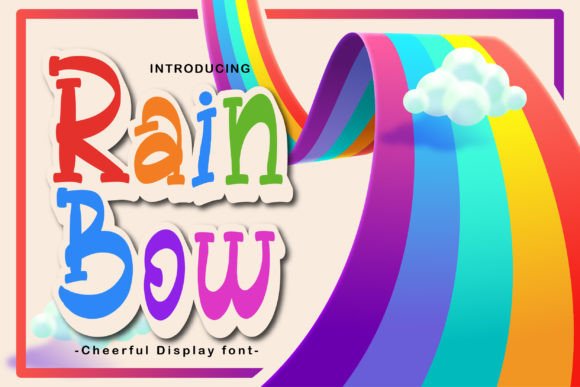
To understand how to best utilize Rainbow, it helps to deconstruct its visual anatomy. At its core, Rainbow is a vibrant display font characterized by its charming eccentricity. It avoids the rigid geometry of a standard sans serif font and the heavy tradition of a serif font. Instead, it occupies a space that feels organic and spirited. The letterforms often feature irregular baselines and varying stroke weights that mimic the natural rhythm of human handwriting, though it remains distinct from a traditional handwritten font or script font. This "sprightly" quality means that no two letters feel sterile; they interact with one another to create a cohesive, flowing visual narrative.
The personality of Rainbow is undeniably vivacious. It is designed to illuminate creative works with a specific kind of joy—one that feels approachable and genuine rather than manufactured. The characters are spaced generously, allowing the unique quirks of each glyph to breathe. This is a typeface that refuses to be boxed in. It carries a retro-futuristic charm that can evoke the groovy aesthetics of the 70s or the playful experimentation of modern indie design, depending on the color palette and context in which it is placed. For anyone building a brand identity that needs to feel human, warm, and energetic, Rainbow provides the perfect foundational voice.
Strategic Applications for Maximum Impact
Understanding a font’s personality is one thing; knowing where to deploy it is another. Because Rainbow is a distinct creative font, it is best used as a focal point rather than a background player. Its strength lies in high-impact scenarios where you need to grab attention instantly. In logo design, for instance, Rainbow can be the cornerstone of a brand that wants to signal creativity, youthfulness, or disruption. Imagine a boutique bakery, a children’s educational app, or a festival poster using this typeface—it immediately sets the tone that this is a space where fun happens.
In the realm of packaging design, Rainbow shines brightly. On a crowded shelf, consumers make split-second decisions. A product wrapped in typography that feels energetic and distinct has a higher chance of being picked up. Whether it’s a line of organic juices, artisanal craft supplies, or trendy cosmetics, the font’s whimsical nature suggests that the product inside is crafted with care and personality. Similarly, for social media graphics, where the scroll is relentless, Rainbow acts as a stop-sign. It creates a visual hierarchy that demands engagement, making it ideal for headers, call-to-action buttons, and highlight covers on platforms like Instagram or Pinterest.
Editorial and Web Design Nuances
While Rainbow is a powerhouse for branding and packaging, it requires a more nuanced touch in editorial design and web design. You would not want to use this display font for body text; its eccentricity would make long-form reading a chore, negatively impacting readability. However, it is spectacular for headlines, pull quotes, and section dividers. In a magazine layout or a blog post, using Rainbow for the title can set the mood instantly, drawing the reader into the content. When paired with a clean, neutral sans serif font for the body copy—think something like Helvetica or Lato—the contrast creates a professional yet lively aesthetic. This font pairing strategy ensures that your design retains legibility while still expressing the creative flair of Rainbow.
Mastering the Font Pairing and Hierarchy
One of the most critical skills in typography is knowing how to mix and match. Rainbow is a "loud" font, so it needs partners that know how to listen. The general rule of thumb is to contrast styles. Because Rainbow has so much character and movement, pairing it with a rigid, geometric sans serif font creates a beautiful tension. The clean lines of the secondary font allow Rainbow’s charm to pop without overwhelming the viewer.
Avoid pairing Rainbow with other highly decorative fonts or complex script fonts. This often leads to visual chaos where the eye doesn't know where to land. If you are working on a brand identity system, establish a clear hierarchy: Rainbow for H1 headers and major branding moments, a standard serif or sans serif for sub-headers, and a highly legible text font for the details. This structure ensures that your design assets remain consistent across different mediums, from a massive billboard to a small mobile screen.
Practical Guidance for Implementation
Before integrating Rainbow into your next commercial project, there are a few practical considerations to keep in mind to ensure dazzling outcomes.
- Evaluating Project Fit: Ask yourself if the tone of the project matches the font’s personality. Rainbow is ideal for a yoga studio, a toy store, or a creative agency. It is likely the wrong choice for a law firm, a heavy industrial manufacturer, or a luxury watch brand that relies on understated elegance.
- Testing Readability: Always test your designs at the size they will be viewed. Rainbow is legible at display sizes, but if you try to force it into a 10pt caption, the details that make it charming will become visual noise.
- Color and Texture: Don't be afraid to experiment with color. A font like Rainbow often responds well to gradients, vibrant hues, or even textured overlays that enhance its playful nature. However, ensure there is enough contrast against the background to maintain accessibility standards.
- Licensing: If you are using this for client work or selling products (like T-shirts or mugs with quotes), ensure you have the correct commercial license. Using a premium font legally protects you and supports the type designers who create these tools.
Ultimately, Rainbow is more than just a typeface; it is a tool for connection. In a digital world that can often feel sterile and repetitive, using a font with such a distinct, vivacious essence allows you to humanize your brand. It tells your audience that there is a real person behind the screen who values joy and creativity. By respecting its strengths and pairing it thoughtfully, you can use Rainbow to elevate your design experience and create work that people genuinely remember and adore.