Creative Farm: The Playful Font for Authentic Design
More Than Just Letters: The Personality of Creative Farm
Let's be honest, choosing a font can feel like a monumental task. You're not just picking letters; you're selecting a voice for your brand, a tone for your message, and the very first impression your audience will have. In a sea of options, it's rare to find a typeface that feels both instantly familiar and delightfully unique. That's precisely the space Creative Farm occupies. It’s a premium font that doesn’t just sit on the page—it communicates. It’s a playful and genuine display font designed to feel approachable and real, cutting through the digital noise to create a human connection.
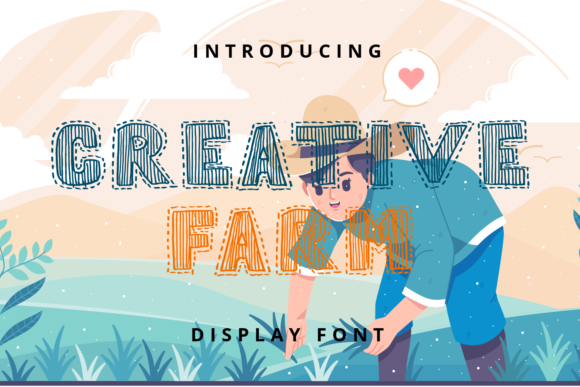
Visually, Creative Farm strikes a beautiful balance. It carries the charm of a handwritten font without the illegibility that often comes with script styles. There’s a softness to its rounded terminals and a slight, intentional irregularity in its baseline that mimics the authentic feel of hand-lettering. Yet, it maintains a remarkable clarity and consistency, making it far more versatile than a typical script font. It’s not trying to be a perfect, geometric sans serif font, nor is it a formal serif font. Instead, it carves its own path as a creative font with a warm, welcoming personality. Think of it as the typographic equivalent of a friendly smile or a firm, confident handshake—it puts people at ease while establishing credibility.
Where Creative Farm Truly Shines: Real-World Applications
The true test of any design asset is its utility. A font can be beautiful, but if it doesn't solve problems, it’s just a decorative novelty. This is where Creative Farm proves its worth as an incredibly asset to your fonts’ library. Its strength lies in its adaptability across a wide spectrum of projects, making it a workhorse for professionals and hobbyists alike.
For logo design and brand identity, Creative Farm is a standout choice. It injects personality into a brand without sacrificing professionalism. Imagine it for a local bakery, an artisanal coffee shop, a children's boutique, or a sustainable skincare line. It immediately conveys a sense of craft, care, and approachability. In packaging design, it can make a product feel more personal and trustworthy, helping it stand out on a crowded shelf. For editorial design, such as book covers or magazine headlines, it draws the reader in with a friendly, engaging tone that a more rigid typeface might miss.
Its application extends powerfully into the digital realm. In web design, Creative Farm can be used for impactful headings, call-to-action buttons, and hero text to guide the user's eye and create a memorable experience. It’s a fantastic tool for social media graphics, where a post has only a second or two to capture attention. Its inherent friendliness boosts engagement and makes content feel more shareable. Entrepreneurs and small business owners will find it invaluable for creating cohesive marketing materials, from email newsletters and digital ads to physical flyers and business cards, ensuring their brand identity remains consistent and recognizable.
Integrating Creative Farm into Your Design Workflow
Adopting a new typeface into your toolkit is a strategic decision. Here’s a practical guide to making Creative Farm work for you, ensuring it elevates rather than complicates your projects.
Evaluate the Project's Soul: Before you even open your design software, consider the project's core message. Does it call for warmth, authenticity, and a touch of playfulness? If the goal is to convey serious, corporate authority or minimalist, high-fashion elegance, Creative Farm might not be the right fit. But for projects centered on community, craft, wellness, family, or small-batch quality, it’s often the perfect choice.
Master the Art of Font Pairing: No font is an island. Creative Farm’s expressive nature means it pairs best with more neutral, clean companions. A classic pairing strategy is to use it for headlines with a simple sans serif font for body copy. For example, set your main heading in Creative Farm and use a font like Lato, Open Sans, or Proxima Nova for paragraphs. This creates a clear visual hierarchy—the playful display font grabs attention, while the clean body text ensures effortless readability. Avoid pairing it with another highly stylized script font or decorative typeface, as this will create visual chaos.
Test for Readability and Hierarchy: Because Creative Farm is a display font, its primary role is for headlines, titles, and short bursts of impactful text. While it’s legible at medium sizes, always test it at the size it will be viewed. Use it to establish a strong hierarchy: large for the main headline, slightly smaller for subheadings, and then switch to your body font. This not only looks professional but also guides your reader logically through the content.
Understand the Included Styles: A high-quality commercial font like Creative Farm often comes with more than just the basic alphabet. Check for a full character set, including numerals, punctuation, and multilingual support. Look for stylistic alternates or ligatures—these are alternate versions of certain letters that can add a custom, handcrafted feel to your work, helping to avoid repetition and enhance the font’s genuine character.
Navigate Commercial Licensing: Finally, a crucial step for any professional. Ensure you understand the font’s licensing. A reputable premium font will have clear terms for commercial use. Whether you’re designing for a client, selling products with the font on them, or using it for your own business’s marketing, the license must cover that application. This isn’t just about legality; it’s about respecting the work of the type designers who created this valuable asset.
In the end, Creative Farm is more than just a collection of glyphs. It’s a tool for storytelling. By understanding its personality and applying it thoughtfully, you can leverage this playful and genuine display font