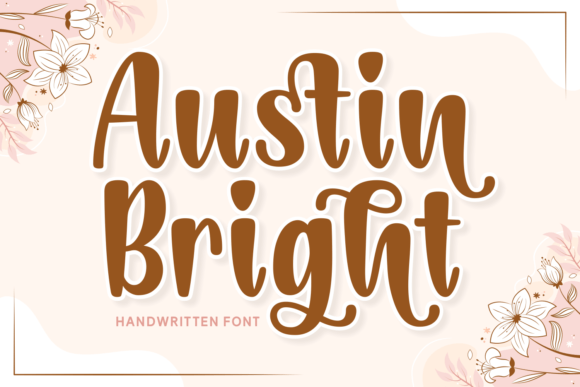
Austin Bright: A Creative Font for Modern Branding
When you’re building a visual identity, the typography you choose does more than just display words—it sets a tone. Austin Bright is a premium font that understands this assignment perfectly. It isn’t just a collection of letters; it is a visual voice that speaks of warmth, personality, and effortless charm. If you have been scrolling through endless lists of typefaces looking for something that feels both contemporary and timeless, you have likely encountered this gem. It bridges the gap between a playful script font and a structured display font, offering a unique aesthetic that feels alive on the page or screen.
What makes Austin Bright stand out in a crowded market of design assets? It begins with the fluidity of its strokes. Unlike rigid, geometric typefaces that can feel cold or corporate, this font features whimsical curves and a rhythm that mimics natural handwriting without sacrificing legibility. It is a creative font that manages to be sophisticated without being stuffy. Whether you are a seasoned graphic designer, a small business owner DIY-ing your website, or a bride planning the perfect stationery suite, this typeface offers a solution that feels tailored and intentional. It captures the essence of modern typography—clean, expressive, and versatile.
The Anatomy of Charm: Visual Style and Appeal
To truly appreciate Austin Bright, you have to look at the details. It falls into the category of modern display typefaces, but it borrows the best qualities from handwritten font styles. The letterforms possess a gentle bounce and an irregular baseline that adds human energy to digital layouts. This isn't the messy, illegible scrawl you might associate with casual scripts; it is refined. The connections between letters are thoughtful, ensuring that the flow remains smooth even at high speeds of reading.
The visual weight of the font is substantial enough to hold its own as a headline but airy enough that it doesn't overwhelm the viewer. This balance is crucial for brand identity. When a customer looks at your logo or a headline on your website, you want them to feel a specific emotion. Austin Bright evokes feelings of approachability and optimism. It suggests that a brand is friendly, creative, and paying attention to the details. In a landscape dominated by stark minimalism, this font offers a breath of fresh air—a reminder that design can be functional and beautiful simultaneously.
Strategic Applications: Where Austin Bright Shines
Understanding the personality of a font is only half the battle; knowing where to deploy it is where strategy comes into play. Austin Bright is incredibly versatile, but like any premium font, it has environments where it truly excels.
1. Branding and Logo Design
For businesses in the lifestyle, beauty, wellness, or creative sectors, this font is a goldmine for logo design. It creates an immediate emotional connection. Think about a boutique coffee shop, a handmade jewelry line, or a creative coaching business. Using Austin Bright for the primary wordmark gives the brand an instant "face" that is warm and inviting. However, because it is a display font, pairing it correctly is essential. You wouldn't want to use it for long paragraphs of body text. Instead, pair it with a clean sans serif font for the tagline and body copy to maintain readability while letting the logo do the heavy lifting.
2. Editorial and Packaging Design
In editorial design, such as magazine covers or blog headers, Austin Bright commands attention. It draws the eye directly to the headline, promising content that is engaging and reader-friendly. Similarly, in packaging design, it adds a tactile quality. Imagine this font on a label for artisanal jam or a scented candle. It communicates "handcrafted" and "premium" without needing to say a word. The curves of the letters suggest the care that went into the product inside the box.
3. Digital Presence and Social Media
The digital space is fast-paced, and you have milliseconds to capture attention. Austin Bright is a powerhouse for social media graphics. Whether you are creating quote cards for Instagram, promotional banners for a sale, or headers for your newsletter, the font pops off the screen. Its modern style aligns perfectly with current web design trends that favor personality over corporate rigidity. It works beautifully in hero sections of websites, provided the background doesn't compete with its intricate details.
Mastering the Pairing: Practical Typography Guidance
One of the most common pitfalls for non-designers is choosing a font based solely on how it looks in isolation. A great typeface is like a great actor—it performs best when cast with the right co-stars. Because Austin Bright has such a strong personality, it requires a supporting cast that is quiet, neutral, and structured.
The best font pairing strategy for Austin Bright is to contrast it with a geometric or humanist sans serif font. Fonts like Montserrat, Lato, or Open Sans work exceptionally well. The lack of ornamentation in the sans serif allows Austin Bright to remain the star of the show. Avoid pairing it with a serif font that has high contrast or heavy serifs, as this can make the layout look chaotic and difficult to read.
Visual Hierarchy and Readability
When using Austin Bright, think of it as your "shout." It is used for the big, important messages. The rest of your text should be a "whisper." This creates a clear visual hierarchy. If you use it for a headline, ensure there is plenty of "white space" (negative space) around it. The fluid nature of the script means it needs room to breathe; crowding it against borders or other text elements will diminish its impact.
Testing and Evaluation
Before finalizing your designs, always test the font in the specific context it will be used. If you are designing for web design, check the rendering on different browsers and mobile devices. While it is a display font, you still want to ensure the thinner strokes don't disappear on low-resolution screens. For print, print a test sheet at actual size. Sometimes a font that looks elegant on a high-res monitor can look muddy when printed on textured paper stock.
Commercial Use and Licensing Considerations
As you integrate Austin Bright into your workflow, it is vital to address the business side of design assets. This is a commercial font, which means it typically requires a license for commercial use. Whether you are a freelancer creating a logo for a client, or a business owner using it on your own merchandise, you must ensure you have the correct license.
Check the licensing terms regarding the number of users (seats) and the medium (print vs. web). Some licenses cover social media but require an add-on for app development or large-scale packaging design. Respecting these terms is part of professional brand strategy—it protects you legally and supports the type designers who create these beautiful tools.
Ultimately, Austin Bright is more than just a pretty face. It is a strategic tool for brand identity. It offers the warmth of a handwritten font with the reliability of a premium font. By using it thoughtfully—pairing it with clean sans serifs, respecting its need for space, and deploying it in high-impact areas like logos and headers—you can elevate your projects from amateur to professional. It captures the spirit of contemporary design: personal, polished, and full of life.